Precision Details That Make the Cut Stand Out
Haircuts with Designs in Tiffin for clients who want precise pattern work built into the finished style
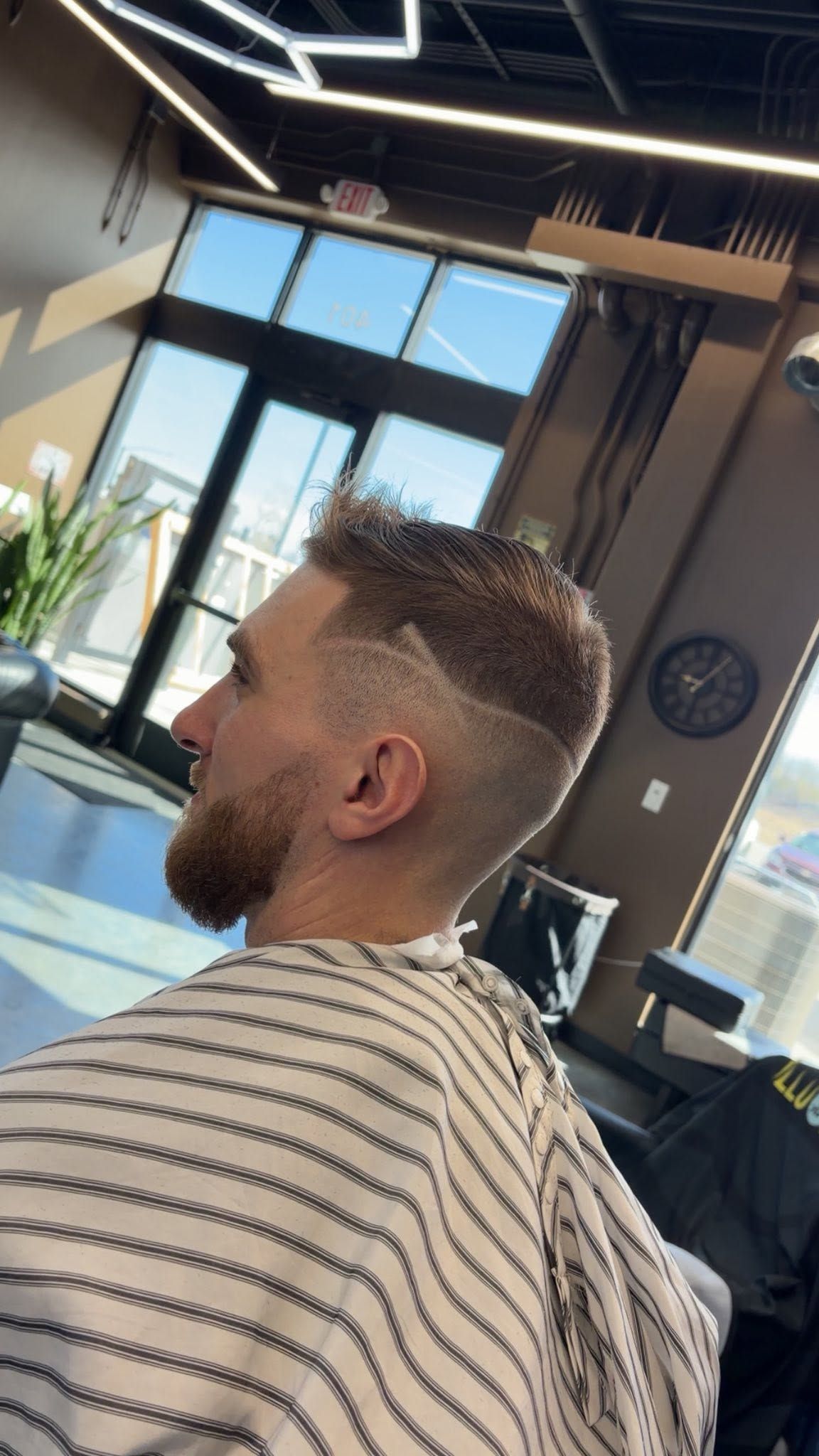
The difference between a standard haircut and one that carries a deliberate design is measured in clipper accuracy across very small distances—lines that must be clean, consistent, and placed exactly where the overall style requires them. Fade Avenue's Haircuts with Designs in Tiffin incorporate pattern work directly into the finished cut, with the design's shape and placement adapted to the requested look and the client's natural hairline. The result is visible immediately and functions as an integral part of the cut rather than an afterthought added to the edge.
Design work involves using detail trimmers to carve precise lines, geometric shapes, or freehand patterns into sections of closely clipped hair. The scale, complexity, and placement of the design depend on what the client wants and what the surrounding haircut structure can support—a tight fade provides the best canvas for detailed pattern work because the contrast between clipped and skin-level hair makes lines read clearly. Simpler designs placed in high-contrast areas deliver sharp visual results, while more intricate patterns require enough surface area and uniform density to remain legible as the hair grows.
Call Fade Avenue at (319) 626-2232 to book your appointment and bring a reference image or description of the design you want incorporated into your cut.
What Haircuts with Designs Actually Accomplish
Executing a design within a haircut requires the barber to complete the full cut first, establish the fade or taper that forms the foundation, and then apply the design as a final precision step using a liner or detail trimmer. The order matters because the design's visibility depends on the background contrast already being set—adding pattern work before the fade is finished produces inconsistent depth and uneven line definition. At Fade Avenue, the design phase is treated as part of the cut's structure, not a separate add-on applied quickly at the end.
After the appointment, the design reads as a sharp, intentional element of the overall style—clean edges with defined negative space where the clipper removed hair to the skin. Clients who wear designs frequently, including teens and kids, notice that the pattern remains most visible in the days immediately following the cut, with the contrast gradually softening as the hair grows back. That growth timeline makes the design a natural reason to maintain a consistent appointment schedule.
Design options range from straight-line geometric work to curved or freehand patterns, and some clients request script or initials in areas with enough surface space to carry that level of detail. Fade Avenue welcomes clients who come in with a clear design idea and those who want to discuss options during the consultation—describing what direction or style the design should suggest is enough to start a productive conversation about what's workable within the cut..
What Clients Ask About Design Cuts
Below are the questions most commonly asked by clients in Tiffin who are considering a Haircut with a Design for the first time or returning with a new pattern in mind.
How do I describe what design I want if I don't have a reference image?
Describing the general shape—straight lines, curves, a specific symbol, or geometric angles—along with where on the head you want it placed gives the barber enough to work with and start a conversation about what's achievable.
What hair type works best for design cuts?
Tightly clipped or faded areas with low hair density provide the clearest canvas for design work because the contrast between the cut line and the skin reads sharply—thicker or curlier hair at low lengths can work but may require slightly bolder lines to stay legible.
How long does a design stay visible after the cut?
Most designs remain clearly defined for one to two weeks depending on how quickly the hair grows back into the clipped area, with faster-growing hair softening the contrast sooner than slower-growing hair.
Why is the fade quality important for design work?
The fade creates the uniform, low-contrast base that allows a design's lines to read clearly—an inconsistent fade behind a design introduces visual noise that competes with the pattern and makes the detail harder to see.
Are design cuts appropriate for kids in Tiffin schools?
Most schools in the area don't restrict haircut styles at the elementary or middle level, but it's worth confirming specific dress code policies before booking if a child's school has guidelines about appearance.
Fade Avenue is ready to work with clients who want pattern detail incorporated into their next cut—call (319) 626-2232 to set up your appointment and talk through your design idea before arriving.